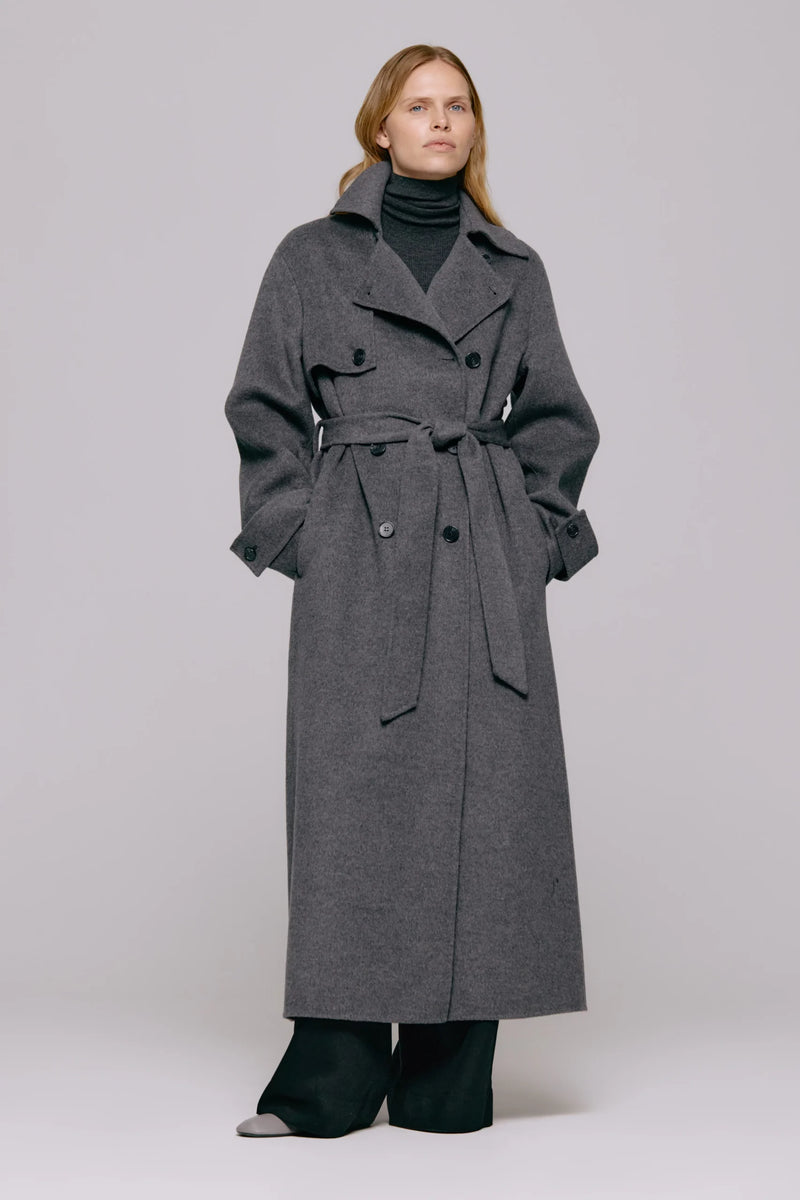
A wool coat is any coat made mainly from woven wool, built for warmth in cold, dry weather. A trench coat is known by its style: double-breasted and belted, with a storm flap, and traditionally cut in cotton gabardine to keep out rain. A wool trench coat puts the trench's shape in a fabric made for winter.
In wool, the trench coat becomes a different garment from the cotton classic. The gabardine trench was built to shed rain; the wool version is built for the months when the problem is cold. Choosing one well comes down to three things: the fabric, the fit, and how much care you are willing to give it.
Wool coat or trench coat?
- Warmth. A wool coat is made for cold. A cotton trench is made for rain and wind, worn over layers in spring and autumn.
- Weather. Gabardine sheds light rain. Wool handles cold and some damp, but it is not waterproof.
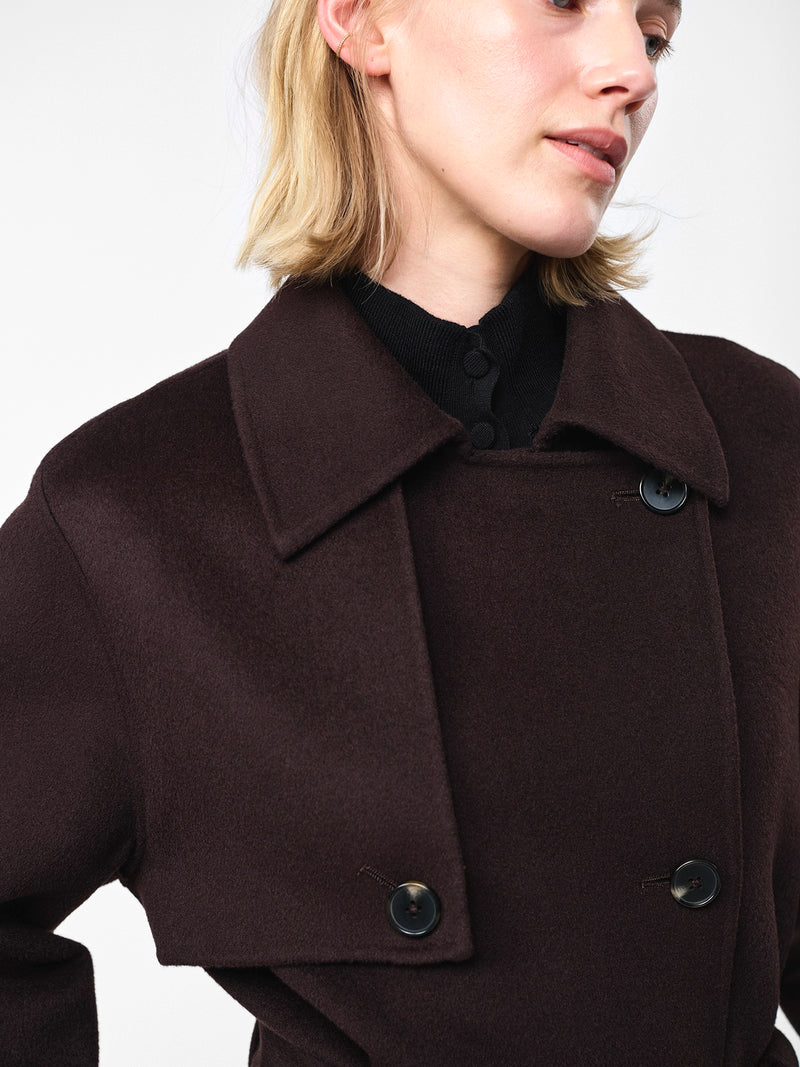
- Details. A trench has a double-breasted front, a storm flap, a belt and cuff straps. A wool coat can take any shape, from a straight overcoat to a wrap coat.
- Both at once. A wool trench coat keeps the trench's details and adds a wool coat's warmth.
What double-faced wool actually means
Most wool coats are a shell of fabric with a lining sewn inside. A double-faced coat is woven differently: two layers of wool joined in the loom, finished clean on both sides. There is nothing to line, so the coat is lighter than its warmth suggests, drapes closer to the body, and shows the same quality inside as out. It is slower to make and uses more wool, which is why you see it in tailoring ateliers more often than on the high street.
The practical differences are easy to feel. An unlined coat moves with you instead of over you. There is no lining to wear through, wrinkle, or pull at the seams. And because the fabric is dense rather than padded, the coat keeps a precise line through the shoulder even after years of wear.
Our version of this fabric is described in more detail on our double-faced wool page. The coat we make from it is the Thale Wool Trench Coat, cut long, with a self-fabric belt.
How it should fit
A wool trench coat is outerwear for real life, which means it has to close comfortably over what you actually wear in winter. Check three points in the fitting room or the hallway mirror. The shoulder seam should sit at the edge of your shoulder, not beyond it. Belted, the coat should follow your waist without pulling at the button. And with a sweater underneath, you should be able to cross your arms without the back going tight.
If you are between sizes, take the fit you want open, not belted. A belt can always draw a coat in; nothing can let out a shoulder.
The care that makes it last
Wool asks little, but it asks consistently. Dry clean a wool coat rarely, at the end of the season rather than through it. Between wears, hang it on a wide hanger so the shoulders keep their shape, and give it air rather than washing. A soft garment brush, used now and then, lifts surface lint and revives the nap. Treat it this way and a double-faced coat is not a seasonal purchase; it is the piece the rest of your winters get built around.
Browse all our wool coats in the Coats and Jackets collection.